Sunday, 27 April 2014

Women and the Post-Colonial Indian State

Title: Women and the Post-Colonial Indian State
Author: Nilendra Bardiar
ISBN: 978-93-82395-59-1
Binding: Hard Cover
First Edition: 2014
Language: English

About the Author:
Dr. Nilendra Bardiar is currently working as Assistant Professor at Delhi College of Arts and Commerce (DCAC), University of Delhi. He previously worked as Research Associate with Indian Institute of Dalit Studies. He has done MA (2005-7), M.Phil (2007-9) and PhD (2009-13, awarded in 2014) in History from JNU. 

About the Book:
The object of this book is to look into some aspects of law making, policy formulations, and implementation of the constitutional and legal provisions etc. by the post-colonial state in India vis-à-vis gender justice and women “empowerment” and will try to examine the State’s perspective on gender relations. This will lead to theorizing the nature and character of the Post-colonial State from a gender perspective. The book will also go into the participation of women in the movement for their rights and the role of women socio-political organizations in the process. While the primary concern of the book will be the post-colonial period, yet, to put the things in the right perspective and to bring the context, it may be necessary to dwell briefly upon the pre-1947 period also (especially the period of 1920 onwards) to understand the working of the post-colonial state in the aftermath of Independence. During the colonial period, the construction of woman as an individual and as a social-familial being in the Gandhian discourse and Nehruvian vision’s divergence from it in the post-colonial period is too important to be left out of the scope of this book.

Ideology and Activities of All India Hindu Mahasabha


Title: Ideology and Activities of All India Hindu Mahasabha
Author: Nilendra Bardiar
ISBN: 978-93-82395-51-5
Binding: Hard Cover
First Edition: 2014
Language: English


About the Author:
Dr. Nilendra Bardiar is currently working as Assistant Professor at Delhi College of Arts and Commerce (DCAC), University of Delhi. He previously worked as Research Associate with Indian Institute of Dalit Studies. He has done MA (2005-7), M.Phil (2007-9) and PhD (2009-13, awarded in 2014) in History from JNU. 

About the Book:
In 1948, we observed two contrasting images of the Hindu Mahasabha leaders. In the first image, SP Mookerjee was being included within the Nehru cabinet while in the second image another well known Hindu Mahasabha leader VD Savarkar is being put on trial for Gandhi’s murder. Obviously, the question rises do these contrasting images embody in themselves two contradictory histories of Hindu Mahasabha? If yes how have these two histories continue to exist within the same organization for such a long time? This book traces the ideologies, activities and dilemmas that defined the Mahasbha in 1940s.


Wednesday, 16 April 2014

Ritual, Politics and Power in North East India: Contextualising the Lai Haraoba of Manipur

Title: Ritual, Politics and Power in North East India: Contextualising the Lai Haraoba of Manipur
Author: Otojit Kshetrimayum
ISBN: 978-93-82395-50-8
First Edition: 2014
Binding: Hard Cover
Language: English

About the Author:
Otojit Kshetrimayum is a sociologist with interests in cultural and industrial sociology. He had his education from University of Delhi; Jamia Millia Islamia; and Jawaharlal Nehru University, New Delhi. Currently, he is faculty and Coordinator of Centre for North East at V.V. Giri National Labour Institute under Ministry of Labour & Employment, Government of India. He is the Course Director of the International Training programme on Managing Development and Social Security Measures under ITEC/SCAAP Programme of the Ministry of External Affairs, Government of India.

Recipient of  ICSSR Doctoral Fellowship, he had taught in the Department of Social Systems and Anthropology, Sikkim Central University and was the founding Coordinator of the Department introducing MA, MPhil/PhD in Sociology. He had also worked in Women’s Studies and Development Centre, University of Delhi as Senior Fellow.

He is the Assocate Editor of Labour and Development journal. He has edited a special issue on Labour, Employment and Social Protection in North East India. Some of his published research papers include Sociology of Labour and Social Stratification in North East India: Contexualising Handloom Weaving as an occupational Craft in Manipur; CSR Provisions in Indian Companies Act, 2013: An Overview; Cloth, Women and Social Change: Situating Handloom Weaving in Manipur; Rethinking Cooperatives in Rural Development: A Case Study of Handloom Weavers’ Cooperatives in Manipur; Women and Shamanism in Manipur and Korea: A Comparative Study; Mapping Cultural Diffusion: A Case Study of ‘Korean Wave’ (Hallyu) in North East India; ICT Integration in School Education: A Sociological Proposition.

He was selected for the ‘Next Generation Leaders Program’ by Korea Foundation and visited Seoul, South Korea. He is the President of Researchers’ Association for the Study of Korea. 

About the Book:
The world we live today is the age of urbanization, modernization, secularization and globalization. There has been a process of rationalization in every sphere of life. It seems that that there is no place for irrationality in such a social system. It has been assumed that ritual action has declined in importance in urban conditions. Nevertheless, today, ritual is of greater importance than is often realized. There is a need to introspect this perplexing and paradoxical aspect.

The patterns of religious behaviour, like other patterns of social behaviour, are of great interest to sociologists, since they underscore the relationship between religion and society. Religious ritual is one of the dimensions of religious behaviour. The beliefs and ideals of different civilizations are often formulated in their rituals more explicitly than in any other cultural trait, which gives the study of ritualism a greater sociological significance. What is more significant here is to take into account the dynamics surrounding the ritual not only in terms of its ritualistic or mythological connotation but also in terms of other variables such as modernization, globalization, migration, national and regional politics etc., which constitute important variables influencing its dynamics. Notably, there has been a great resurgence of Lai Haraoba ritual in Manipur during the last few decades. It is in this context that the present study tries to examine the dynamics of Lai Haraoba. The main argument put forward in this study is that the rise in the number of religious ritual of Lai Haraoba is associated with the changing socio–political dynamics of the present Manipur where three predominant ethnic communities constituting the Meities, Nagas and Kukis are settled. The increase in tendency for the establishment of the separate territory and administration of different tribes such as Nagas, Kukis etc. has a threat to the existing polity and territory of the state. This can be observed from two changing trends of religion and ritual. Firstly, the increase trend of Lai Haraoba in the state in general and urban area in particular shows the consciousness of the pre–Hindu identity at present. And secondly, the ritualization of the tribal identity in the Lai Haraoba shows the basic urge of the Meiteis to reassert the integral Manipuri identity of the pre–Hindu period. Apart from this, at micro level also there exists certain social and political dynamics, which are associated with Umanglai/ Lai Haraoba.

Lai Haraoba is a ritualistic festival of the Meiteis observing from the ancient times. It is a ritual enactment of the creation myth. It mirrors the entire culture of Manipur and depicts the close affinities between the hill and plain people. It is in fact the combination of religious recitations, traditional music and dance, traditional social values and ancient cultural aspects. It retains the original characteristics of the traditional Meitei religion. Celebrated in honour of the sylvan deities known as Umanglai, the festival represents the worship of traditional deities and ancestors. It literally means, “the pleasing of the god” (Shakespeare) or “the merrymaking of the gods and goddesses” (Nilakanta) or “the god’s rejoice” (Achoubisana). Lai Haraoba, which is about the happiness of the gods after they created the world of human beings, is celebrated in every leikai (locality), and every khul’s (village) laipham (abode of gods) but not everywhere at the same time. It is a community worship wherein the site of worship is situated outside the home, in the domain of the public. Each festival is dedicated to a male and a female deity as a couple who are addressed as ‘Lainingthou’ and ‘Lairembi/Lairemma’ respectively. The theme of the festival is that of celebration of life, its origin, fulfillment of the purpose of living and the continued existence through procreation.

The Lai Haraoba festival is celebrated every year, sometime in April or May in different areas of the state. The celebrations are spread over a long period that could last from a few days to a month. It is a series of rituals. Each ritual is a combination of hymn, dance and music. The ritualistic performance is through the medium of dance. This festival is perhaps the most authentically Meitei of all the traditional festivals. It is also the one which most closely preserves the ancient Manipuri culture and philosophy, and the importance of which is increasing today.

It is in this setting that the present study tries to explore the trends in Lai Haraoba from the early days to the present. The study also takes into account the role of state, bureaucracy, middle class, religious boards and councils, Lai Haraoba Committees and civil society in the affairs of the Lai Haraoba. It mainly tries to locate the relation between the ritual of Lai Haraoba and the political identity of the state. 

The primary sources of information for this study are royal chronicle (Cheitharol Kumbaba), indigenous archaic literature and ancient traditional myths. There are also other secondary sources like the accounts of the British Ethnographers cum Political Agents, and other modern writings and records. Most of the previous scholars confined their works mainly on the ritualistic part of Lai Haraoba. They haven’t discussed much on its other aspects like its implications on the social, political, economic and cultural structure of the Manipuri society.  This is only an attempt to explore the dynamics of Lai Haraoba in the contemporary Manipuri society. 

Sunday, 6 April 2014

Urban, Cultural, Economic and Social Transformation: History of New Delhi 1947-65

Title: Urban, Cultural, Economic and Social Transformation: History of New Delhi 1947-65
Author: Nilendra Bardiar
ISBN: 978-93-82395-49-2
Binding: Hard Cover
First Edition: 2014
Language: English
Cover Photo(s): Ms Sathya Scinha

About the Author:
Dr. Nilendra Bardiar is currently working as Assistant Professor at Delhi College of Arts and Commerce (DCAC), University of Delhi. He previously worked as Research Associate with Indian Institute of Dalit Studies. He has done MA (2005-7), M.Phil (2007-9) and PhD (2009-13, awarded in 2014) in History from JNU.

About the Book:
There has been a spate of studies on Partition and the arrival and subsequent settlement of non-Muslim refugees in Delhi. The communal violence and uprooting and migration of such a large number of people, which has till now, been unprecedented. But hardly any of these studies have kept the city as a whole and its new evolving geography, economy and culture as a major focus. At most, their human geographies do not extend beyond the refugee colonies and the families settled over there. But it cannot be denied that the “Partition” and “refugee” side of the story has been narrated well but the “city”, its newly evolving culture and its citizens’ lives per se have mostly been left mute.

A few government publications mostly based on the research and data compilation by current or ex-bureaucrats have however tried to study and tell the city’s side of this story through administrative, land usage and urban development perspectives but these studies cannot comprehend the human and the cultural dimensions. Each existential aspect of this city of Delhi was tremendously transformed by the arrival of new population because of Partition. From its physicality to its psyche and language to the core of its cultural soul, everything had to go through some sort of metamorphosis during the decades following the Partition. The feeling of being the capital of India had perhaps not sunk in well in around one and a half decades since the transfer of capital from Calcutta to the city when Partition knocked on its door and took away a large proportion of the people who supposedly formed the core of its cultural whole. But ‘the last conquerors of this city’ were not hordes of those who had come to loot and destroy and stamp their reign and rule on its coins but were those who had been on the run themselves—from violence in Pakistan to the lack of opportunities elsewhere in India from where they finally arrived in Delhi. What they were looking for was more than a mere shelter and hearth. They were seeking ladders to rise up and securely. They found some and they created many.

When the Partition refugees arrived they had their own cultural baggage but they did not associate the romance of nostalgia with it. Refugees changed the social profile of Delhi after 1947. The reason that most of the refugees did well and succeeded in rising up the socioeconomic ladder of status and prosperity, despite having started from scratch is that as they were left with no option but to succeed in their endeavours, no matter how much and what it cost them in terms of initial struggle so they persevered and did all that they could to succeed.

In 1947, Delhi was woefully under developed and unexpanded and geographically and spatially too sparsely settled to fit into the mould of the national capital of a newly independent country, as populous as India. Even if refugees would not have arrived to settle in Delhi, the city had to expand and grow. The earliest ‘planning’ of the city were carried out basically for two main purposes—for settling those who had arrived and for creating an infrastructure that any national capital would need. These efforts at planning had to contend with too many pulls and pressure and concerns and challenges from different quarters.

A very important point that seems to mostly go unnoticed is that the lament and mourning for the loss of ‘real’ culture of Delhi tends to overlook the simple logic that the onus of preserving it did not and does not rest on those who came from outside but on those who chose to lament and mourn its supposed fading away rather than preserving, living and passing it on to the future generations. And those who choose to do the latter do not see anything to lament for. The old, persianized, classical, ‘real’ culture of Delhi never had to compete or fight with the new arrivals. It existed and still exists in the lives and geographies of the people who want to live it and this will continue to remain so. Post-Independence Delhi did not need a predominant culture to define itself as there were not one but many cultures that came to seek a place for themselves but ironically some of the observers tend to see none of these cultures so as to buttress their point of this city having no culture. 


Tuesday, 25 February 2014

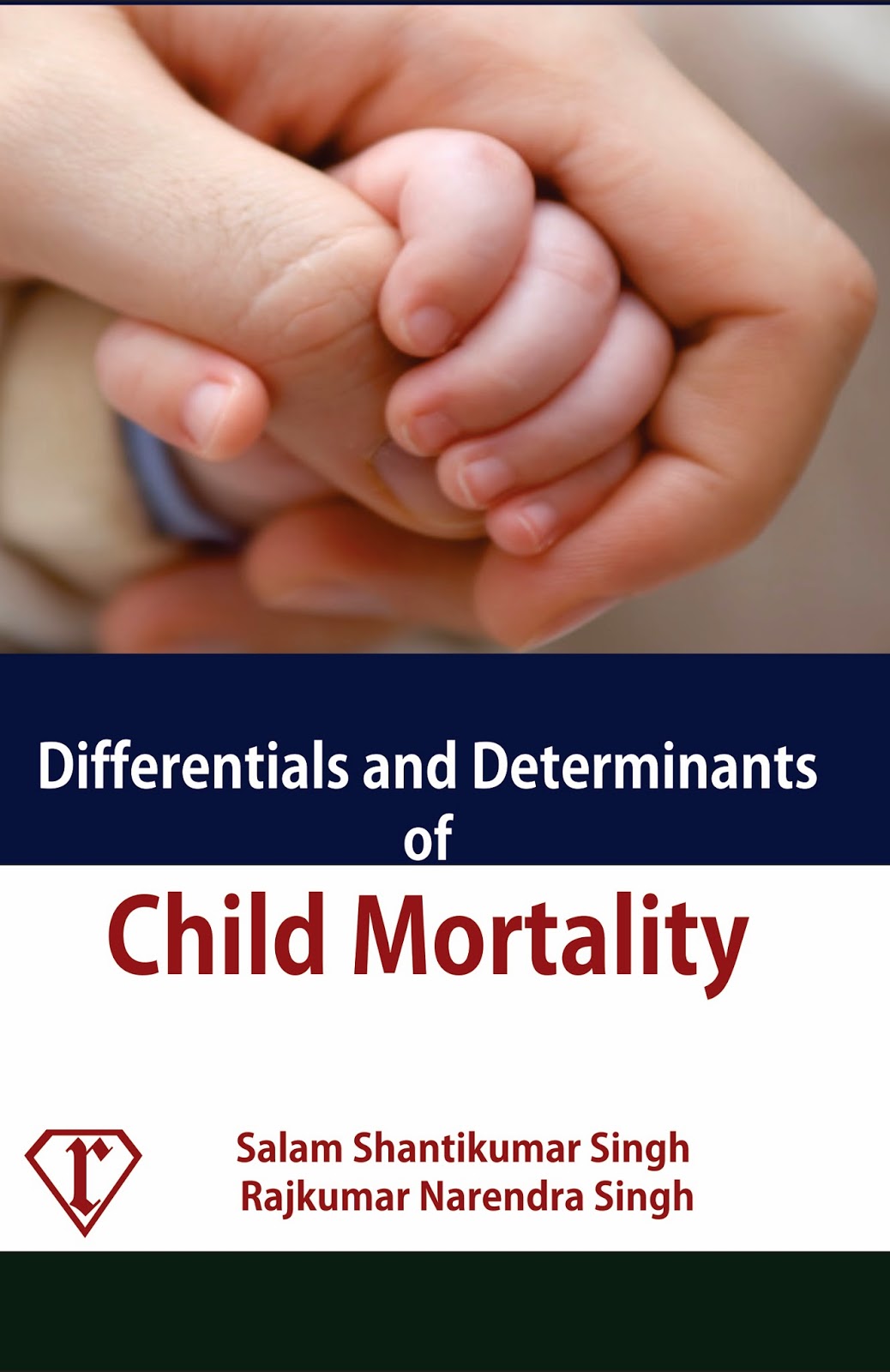
Differentials and Determinants of Child Mortality


Title: Differentials and Determinants of Child Mortality
Author: Salam Shantikumar Singh & Rajkumar Narendra Singh
ISBN: 978-93-82395-45-4
Binding: Hard Cover
First Edition: 2014
Language: English

About the Book:
This book determines scientifically the role of important prognostic variables like socio-economic, demographic, environment, sanitation, medical/health care, exposure to mass media, breastfeeding, and sex preference on the differential mortality pattern of childhood. The study is based on a sample of primary data and inference is made through statistical techniques  descriptive statistics, logistic regression model, factor analysis, Cox’s proportional hazard model, etc.

The book appears to be very useful to the students, researchers and scientists of diverse segments of individuals who are working, in various capacities, in this field of very innovative human research. The information and techniques described here are useful and applicable to their substantive field of studies including population, social, humanity and medical sciences. Further, the findings and suggestions arrived at in the conclusion are very fascinating and useful to the planner and executors, especially health and population, for their better and effective health planning and delivery system.

About the Authors:
Salam Shantikumar Singh is the Assistant Professor & Head, Department of Statistics, Pachhunga University College, A Constituent College of Mizoram University, Aizawl-Mizoram, India. He has 8 years teaching experience in Statistics particularly Biostatistics, Statistical Inference, Demography and Multivariate Analysis. He has 7 years of research experience and published many research papers in National and International Journals of Statistics, Biostatistics and Social Sciences. Earlier, he was appointed as a Socio-economist in the Nippon Koei & Co. Ltd., Tokyo, Japan for Manipur Sericulture Project. He has ample knowledge of data triangulation and he was involved in the Research project under UN-AIDS for Epidemiological Profiling of HIV/AIDS Situation at District and Sub-District Level Using Data Triangulation. He has provided consultancy services as Statistician to more than 10 research scholars for pursuing Ph. D.

Prof. Rajkumar Narendra Singh is the Head, Unit of Biostatistics, Regional Institute of Medical Sciences (RIMS), Imphal under the Ministry of Health & Family Welfare, Government of India. A teacher by choice he has been teaching Biostatistics and Research Methodology for the last 30 years in various Institutions and Universities. He has so far produced 10 Ph.D. and 3 M.Phil. scholars and more than 50 publications in National and International reputed journals to his credit and is the author of the book  Determinants of Infant Mortality  published by RIMS, MoHFW, GoI. He has carried out a large number of research projects and provided consultancy services to the number of projects and agencies of International repute.

Saturday, 22 February 2014

The Potent DNA

Title: The Potent DNA
Author: Jodha Chandra Sanasam
ISBN: 9789382395386
Binding: Soft Cover
Language: English
Category: Novel (Literature/Fiction)

About the Novel:
Manipur, a small state tucked far away in the easternmost corner of India, grew to nurture insurgents and revolutionary bodies. Spills-over from the revolutionary movements and ugliness in their related activities splashed everywhere originating from the fundamentals of self determination, struggle for freedom and independence. The spills-over got hatched out in the forms of: threats, extortion, coercion, abduction, vandalism, terrorism, gun shots, assassinations, murderous crimes, rapid increase of armed organisations on one hand; and on the other, the gripping measures taken up by the state actors, military and paramilitary forces; the list was long.

Dr. Ayush was a victim to two events in his life. The first was a broken hearted separation from his first love in his youth and the second, some of the excesses of insurgency in Manipur. The son of a widow, he grew up a diligent, well disciplined student in spite of lack of money in their household. As a youth he nurtured a healthy untarnished love for his girl Nomita. The love was well reciprocated by Nomita. But their love happened to have crashed on trouble spots was disrupted by odds and unwanted events caused by the unscrupulous acts of some miscreants. Meanwhile when he was a medical student in Calcutta another love developed with a class mate girl from the family of a wealthy businessman. Just near his final MBBS examination Ayush lost both his girls and he became a frustrated young man. Even then he got to his feet, up from his trips-over. Till later in life when he became a professor his efforts to live the rational life of a decent citizen never receded.

A time came when he became a teacher in the medical college and had a well settled married life with a lady doctor of decent demeanour. However he was not happy with his career which persistently got crushed under some sort of nepotism and injustice. Moreover he could never get rid of the persistent pang of broken love where he was at the receiving end. He, however, still remained an apt citizen against all kinds of odds in his life, the man of the family in the midst of a seriously disturbed socio-political turmoil in Manipur.

All his courage, patience and perseverance got smashed down with the repeated disdainful transgression acts of the freedom fighters, whose activities infringed into his otherwise serene private life. He eventually left his dear homeland and the tide of his life took him to overseas, to Bangkok then to Chicago. Later he led the life of a biochemist, a professor, deeply involved in research work of DNA and genes; at the same time he became more philosophical in his view of life with some of his own principles and concepts of God and humanity. However he had a persistent thirst for something without knowing what it was but which made him look out for it in his life. On the other hand his dream of a peaceful progressive Manipur, his homeland, never left his brain waves.

Finally at long last he could identify his thirst. He attained the object of his vision which he had been searching throughout his life without knowing what it was. He met Nomita again after thirty five years and only then he found peace and a way of life which he thought was his way of life.

About the Author:
Prof. Jodha Chandra Sanasam, now on the verge of 70 years of age, is a Writer, Lyricist, Clinician and a Medical Educationist, as well as a social worker. He writes novels, poems, short stories. He is a columnist of the local English daily ‘Huieyen Lanpao’. He also does critical writing.

Music and literature have been all along with him since his young age. During his days at the general and medical colleges he wrote short stories, poems and essays, both in Manipuri and English, and received prizes for such activities. He has written and published 16 books: novels, short stories; poetry, English poetry, English translation of all works of Shri Biren’s poetry in two volumes. He is a Lyricist to the All India Radio, Imphal.

He is a recipient of: National Sahitya Akademi Award in literature for his novel ‘Mathou Kanba DNA’ in 2012; Manipur State Kala Akademi Award 2011, BM Maisnamba Novel Award, Dineshwari Sahitya Manaa, Yendrembam Surolata Puraskar Award for the same novel; ‘Kabya Bhushan’ title, Sanathoi Phulo Lyricist Award, Waribam Meino Sheireng Manaa for his poems and lyrics, and ‘Literary Excellency Award’ from a Manipur Sangeet Natya Mahabidyalay’. He is also a Paul Harris Fellow of the Rotary International; Fellow of the United Writers’ Forum, Madras and Fellow of The Rotary Foundation District 3240.

He is a life member of many a literary organization: The Cultural Forum Manipur; Manipuri Sahitya Parishad Meghalaya; Manipuri Sahitya Parishad, Imphal; Naharol Sahitya Premi Samiti, Imphal; Writers’ Forum, Imphal; North East Writers’ Forum, Guwahati; Apunba Manipuri Matam Ishei Kanglup, Imphal (AMMIK) its Former President); Patriots’ Writers’ Forum Manipur, its President now; and IMAKHOL.

Prof. Sanasam was the Editor in Chief of ‘Filmgee Taibang’, the first ever film magazine of Manipur. He was a member in the jury of the Selection Committee of the 7th Film Festival in Manipur.

Recently Prof. Sanasam received the ‘Award of Excellence in Medicine in the North East’ conferred upon by the down town hospital ltd, Guwahati during its Silver Jubilee Celebration. He received ‘Arambam Samarendra Memorial Distinguished Award; and citations from: the President, Rotary International, HQ Chicago; District Governor, Rotary International District 3240; Association of Otolaryngologists of India, HQ Mumbai as well as from the Eastern Zone and North East Branch respectively. He received also appreciation letters from His Excellency, the Governor of Manipur, and Chairman, Indian National Polio Plus Committee.

He is still active with his profession; at present he is the Professor and Head in the Dept of ENT JNIMS, an institute of medical sciences. He was the President of the Association of Otolaryngologists (ENT Surgeons) of India, Eastern Zone and North Eastern Branch as well; and the founder President of the Manipur Branch of this association of ENT surgeons. He was also the President of the Indian Medical Association (IMA), Manipur State Branch, the Founder Editor of its journal ‘Hakchang Paojel’ and an Editor to its other publications and a Referee to JIMA, the National Journal of IMA; Chairman, Secretary and Editor to RIMS Medical Society; Member of the Academic Council, Manipur University; Treasurer to the Red Cross Society of India, Manipur Branch; Vice president and Coordinator to the Association of Paediatric Otolaryngologists of India, HQ Madras. He had published 19 scientific papers, 3 in American Medical Journals and most of the rest of them in the National Journal; and the rest in regional and local journals.

He had been in various cities in USA, Europe, China, Thailand, Singapore etc. Prof. Sanasam gets deeply associated with various service oriented organizations: he was the Assistant Governor of the Rotary International District 3240, He instituted an academic award for a topper at Class XI promotion exam at the Maria Montessori Senior Secondary School, Koirengei.


Life and Hope: Poetic Muse


Title: Life and Hope : Poetic Muse
Editors: Anupama Chingangbam & Usham Rojio Singh
ISBN: 9788192218212
Binding: Soft Binding
First Edition: 2014
Language: English
Category: Poetry (Literature)

Poets:
Anupama Chingangbam
Dr. L. Swasticharan
Jodha Chandra Sanasam
Lalsangliani Ralte
Moirangthem Priyobrata Singh
Raghu Leishangthem
Rajkumar Bhubonsana
Rojio Usham
Salam Tomba
Shreema Ningombam

About the Book:
Poetic Muse is a collection of poems that are reflections of very sensitive minds towards their surroundings and of a home that is left behind. The poems show a longing for one's homeland and a concern for the state of society that is plagued by many evils. This collection also contains poems that show a range of emotions, from love to sadness. These poems are a representation of self as well as a comment on the world the poets see around them.

Environment and Legal Order: Sustainable Development Law: Special Reference to North East India

Title: Environment and Legal Order: Sustainable Development Law: Special Reference to North East India Author: Yumnam Premananda Singh ISBN...